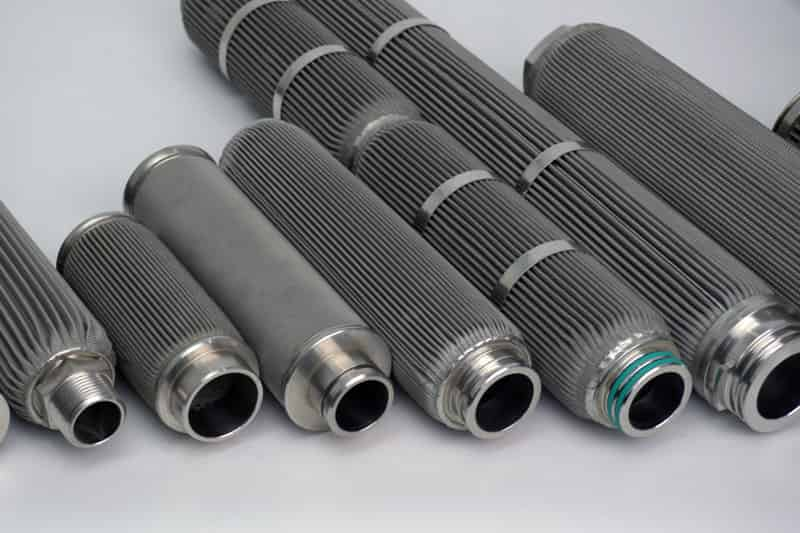
Heavy fuel oils (such as marine fuel and diesel engine fuel) often contain impurities such as water, particles, and colloids during combustion, which can lead to engine component wear, injector clogging, and decreased combustion efficiency. The marine heavy fuel filter improves filtration precision by optimizing filtering materials, enhancing structural design, and increasing contamination retention capacity. This significantly reduces the entry of impurities into the fuel system, thus lowering equipment wear and extending engine life.
Hazards of Impurities in Heavy Fuel Oil
The solid particles, metal oxides, and water in heavy fuel oil are major contributors to equipment wear. Their specific impacts are as follows:
Solid particles: Cause wear on critical components of the fuel system (such as injectors and fuel pumps), reducing combustion efficiency.
Water: Promotes metal corrosion, leads to fuel emulsification, and affects combustion stability.
Colloids and carbon residues: Adhere to the combustion chamber, valves, and piston surfaces, affecting engine performance.
Filtration Technology of Marine Heavy Fuel Filters Marine heavy fuel filters enhance filtration precision through the following technologies:
Multi-layer composite filtering materials: A combination of glass fibers, synthetic fibers, and nano-filtration membranes improves the ability to capture micrometer-level particles.
Gradual pore structure: The outer layers capture larger particles, while the inner layers intercept finer impurities, improving contamination retention and reducing clogging.
Surface charge technology: The filter materials are electrostatically treated to attract extremely small particles, enhancing separation efficiency.
Efficient water separation: Hydrophilic/oleophobic materials separate water, preventing fuel emulsification.
Impact of Marine Heavy Fuel Filters on Equipment Wear Studies show that using high-efficiency filters in the fuel filtration system can:
Reduce wear rates: By reducing the particles entering the fuel system, the wear rate of injectors and fuel pumps decreases by approximately 30%-50%.
Extend equipment life: Reduces carbon buildup and corrosion, improves fuel combustion efficiency, and extends engine maintenance intervals.
Improve fuel economy: Reduces fuel wastage, optimizes combustion performance, and enhances energy efficiency.
Research and Application Case Studies After replacing filters with high-efficiency marine heavy fuel filters, the particulate content in the fuel system of a ship's engine decreased by 40%, and the injector life increased by about 35%. In industrial diesel engines, filter optimization led to a 25% reduction in maintenance costs and a 15% decrease in downtime.
Conclusion High-efficiency marine heavy fuel filters improve the filtration precision of heavy fuel oils by enhancing filter materials, optimizing structures, and strengthening water separation capabilities, significantly reducing equipment wear. Future research directions may include intelligent monitoring of filter lifespan and improving automatic drainage functions to further increase the reliability and cost-effectiveness of fuel systems.