In industrial hydraulic systems, phosphate ester hydraulic oil, with its excellent flame resistance, serves as a crucial medium in high-risk fields such as aerospace, metallurgy, and power generation. The core elements ensuring its efficient operation are the filter media with diverse properties in the filters. These filter media act as the "guardians" of the precision systems. Through different technical approaches and structural designs, they achieve deep purification of the hydraulic oil. The following presents a panoramic analysis starting from the core types of filter media and their application scenarios.
I. Core Types of Filter Media and Application Scenarios
1. Glass Fiber Filter Media: Micron-level Interception Expert under High Temperature and Pressure
Glass fiber filter media, with their outstanding high-temperature resistance and strong dirt-holding capacity, are regarded as the "all-rounders" in the field of hydraulic filtration. Their three-dimensional structure, woven from extremely fine glass fiber filaments, is like a precision filter screen. In ordinary to high-pressure hydraulic systems, they can stably achieve efficient interception of particles as small as 3 渭m and smaller. In the hydraulic systems of aircraft engines and the high-pressure oil circuits of large metallurgical equipment, glass fiber filter media consistently withstand the impact of high temperature and pressure with stable performance, continuously ensuring the cleanliness of the oil and providing a solid defense for the reliable operation of key equipment.
2. Polymer Composite Nanofiber Membrane: Pursuer of Ultra-high Cleanliness
The polymer composite nanofiber membrane can be described as the "high-tech representative" among filter media. Through special surface coating treatment, it constructs a nanofiber network, which is like a precision molecular trap. It can accurately capture micro- and sub-micron particles. In fields with extremely stringent requirements for oil cleanliness, such as semiconductor manufacturing and high-end precision machine tools, this type of filter media is crucial for achieving ultra-high cleanliness standards. With its nanoscale filtration precision, it ensures that the precision components in the hydraulic system are protected from wear and erosion by tiny particles, providing a solid guarantee for the high-precision execution of production processes.
3. Sintered Metal/Stainless Steel Filter Media: The Perfect Combination of Durability and Efficiency
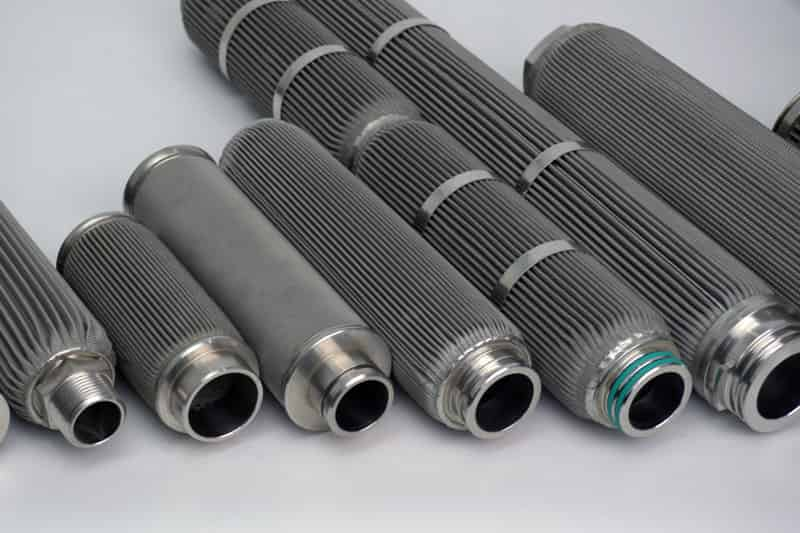
Sintered metal/stainless steel filter media are meticulously manufactured using a multi-layer sintering process, endowing them with excellent mechanical strength and high-temperature resistance. This type of filter media is like a sturdy metal armor. It can not only withstand the impact of oil under high-pressure environments but also maintain good filtration performance after repeated cleaning and high-pressure flushing, enabling cyclic use. In multi-stage filtration systems, it often serves as a key link, undertaking the dual tasks of coarse and fine filtration. Whether in the complex oil circuits of petrochemical equipment or the long-term operation of marine hydraulic systems, sintered metal filter media reduce equipment maintenance costs and enhance the overall reliability of the system with their durability and efficiency.
4. Activated Carbon Composite Filter Media: The Collaborator in Chemical Purification
Activated carbon composite filter media break the traditional single filtration mode, ingeniously integrating adsorption and filtration functions. The activated carbon structure inside is like an efficient adsorption sponge, which can effectively remove moisture, acidic substances, and volatile organic compounds in the hydraulic oil, improving the chemical stability of the oil from a chemical perspective. In practical applications, it often collaborates with other filter media to form a "combined effect." For example, in the hydraulic systems of power equipment, when used in combination with glass fiber filter media, the activated carbon composite filter media can not only filter particulate impurities but also purify the chemical composition of the oil, comprehensively ensuring the quality of the hydraulic oil and extending the service life of the system.
5. Multi-layer Deep Paper/Synthetic Fiber Hybrid Filter Media: The Paradigm of Cost-effective Gradient Filtration
The multi-layer deep paper/synthetic fiber hybrid filter media adopt a unique gradient filtration design, which is like a layered filtration barrier. From the outer layer to the inner layer, the fiber pore size gradually decreases, realizing the interception process of particles from coarse to fine. This design ensures high filtration efficiency while controlling production costs, making it the preferred cost-effective filtration solution. In the main or pre-filtration links of industrial production, it is widely used in various small and medium-sized hydraulic equipment, such as construction machinery and automated production lines. Through layer-by-layer filtration, it effectively intercepts impurities of different particle sizes, providing cost-effective protection for the system while meeting basic filtration requirements.
The selection of filter media for phosphate ester hydraulic oil filters requires comprehensive consideration of various factors, including system pressure, temperature, cleanliness requirements, and cost budget. Each type of filter media plays an irreplaceable role in different industrial scenarios with its unique performance advantages, jointly building a solid barrier for the stable operation of hydraulic systems.